One Kingdom, Four Directions: Brexit and the Fracturing of Britain's Internal Settlement
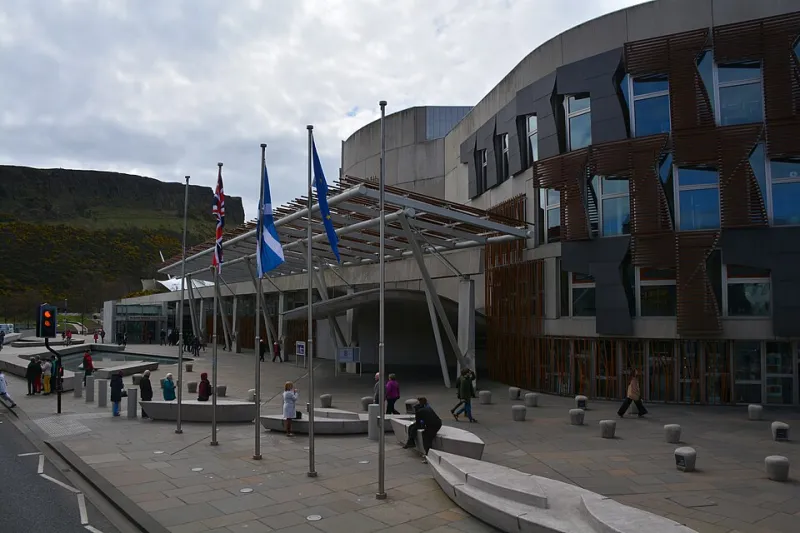
Photo: Lewis Clarke , CC BY-SA 2.0, via Wikimedia Commons
There is a particular irony embedded in the Brexit story that its architects have never quite resolved. The project was defined, above all else, by the language of sovereignty — parliamentary control, national self-determination, the right of a people to govern themselves according to their own priorities. Yet in pursuing that vision, Westminster has presided over a period of constitutional turbulence that has placed the very unity of the United Kingdom under greater strain than at any point since the Good Friday Agreement was signed in 1998.
This is not merely an observation from critics of Brexit. It is a structural reality that even sympathetic analysts have been compelled to acknowledge.
The Devolution Bargain, Disrupted
To understand the current tensions, it helps to recall the context in which devolution was granted. When the Scottish Parliament and the Welsh Assembly (now the Senedd) were established in 1999, they operated within a framework shaped by shared EU membership. Many of the policy areas devolved to Edinburgh and Cardiff — agriculture, environmental regulation, aspects of justice and social welfare — were simultaneously governed by a common European rulebook. The result was a system in which devolution could be generous precisely because the underlying regulatory architecture was shared. Divergence in delivery was possible; divergence in fundamental standards was constrained.
Brexit dismantled that architecture. Suddenly, the question of who controls agricultural subsidies, food safety standards, environmental protections, and professional qualifications became genuinely contested — not just between the UK and Brussels, but between Westminster and the devolved administrations. The Internal Market Act 2020, introduced to ensure the free flow of goods and services across the UK after the European single market was vacated, was met with fierce opposition in Holyrood and the Senedd, both of which argued — with considerable legal support — that it encroached on devolved competences without meaningful consent.
The Welsh Government described it as a power grab. The Scottish Government threatened legal challenge. The episode was not merely procedural: it represented a fundamental disagreement about who Brexit's repatriated powers actually belonged to.
Northern Ireland: The Protocol's Human Reality
If the constitutional tensions in Scotland and Wales have been largely political in character, in Northern Ireland they have carried a sharper, more visceral edge. The region voted 56 per cent to remain in the EU in 2016, and its geography — a land border with an EU member state — made a clean Brexit uniquely complicated.
The solution eventually codified in the Windsor Framework of 2023, after years of the Northern Ireland Protocol's turbulent operation, has created an arrangement without precedent in the United Kingdom's constitutional history. Northern Ireland effectively participates in the EU single market for goods, meaning it operates under different regulatory conditions from Great Britain. Unionists have characterised this as a constitutional betrayal, arguing that a border in the Irish Sea — however notional — undermines the integrity of the United Kingdom they sought to defend through Brexit.
For many businesses and residents in Northern Ireland, the practical consequences have been real and disruptive. Supply chains from Great Britain have faced additional checks and paperwork. Certain goods — from chilled meats to some medicines — have at various points been subject to restrictions that do not apply elsewhere in the UK. The political temperature around these issues has contributed to the collapse and prolonged suspension of the Stormont Assembly, leaving Northern Ireland without a functioning Executive for extended periods during some of its most consequential post-Brexit years.
The Windsor Framework has reduced friction and restored a degree of stability. But it has not resolved the underlying tension: Northern Ireland is simultaneously part of the United Kingdom and, for regulatory purposes, partially integrated with the European Union. That ambiguity is managed, not solved.
Scotland: Independence Sentiment and the Brexit Variable
In Scotland, the relationship between Brexit and independence sentiment is more complex than either side of the debate typically acknowledges. Support for independence was already significant before 2016; the referendum did not create Scottish nationalism. What it did do was alter the political geometry in ways that have consistently favoured the SNP's argument.
Poll after poll since 2016 has shown that a meaningful proportion of Scots who voted No in the 2014 independence referendum — many of whom cited continued EU membership as a reason for their choice — have shifted their position in the wake of Brexit. The argument that independence would require Scotland to leave the EU no longer carries the same deterrent weight when the UK has already done precisely that.
Beyond sentiment, the practical divergence is growing. Scotland has pursued different policy directions on matters ranging from free university tuition to the approach to drug-related deaths, reflecting a political culture that consistently returns different electoral outcomes from those in England. The SNP-led Scottish Government has maintained closer rhetorical alignment with European norms on environmental and social policy, even where regulatory divergence from Westminster has not yet materialised in full.
Whether or not a second independence referendum ever takes place — and the legal and political barriers remain formidable — the constitutional relationship between Scotland and Westminster has been fundamentally altered by Brexit in ways that will not simply recede.
Wales: The Quiet Divergence
Wales is often the least visible actor in these debates, yet the Welsh experience of post-Brexit governance deserves attention. Wales was the only devolved nation that voted, narrowly, to leave the EU in 2016. Yet the Welsh Government, dominated by Labour, has consistently positioned itself in opposition to the Westminster approach to Brexit's implementation — opposing the Internal Market Act, arguing for closer alignment with EU standards, and pursuing a distinct approach to post-Brexit agricultural support through its Sustainable Farming Scheme.
Support for Welsh independence, historically marginal, has grown — though it remains a minority position. More significant, perhaps, is the growing assertiveness of Welsh institutions in articulating a distinct political identity, one that does not simply mirror Westminster's priorities.
A Sustainable Settlement?
The question that hangs over all of this is whether the current arrangements — the Windsor Framework in Northern Ireland, the contested Internal Market Act, the diverging policy frameworks across four nations — constitute a stable equilibrium or a holding pattern before something more significant shifts.
There are those who argue that the strains are manageable; that devolved administrations have always chafed against central authority, and that the political noise exceeds the structural reality. There are others who contend that Brexit has set in motion a process of disintegration that Westminster's current political class is ill-equipped to arrest.
The honest answer is that no one knows. What can be said with confidence is that the United Kingdom that emerges from this period will look constitutionally different from the one that entered it — and that the nature of that difference will be shaped, in no small part, by choices that have not yet been made.