Ploughed Under: The Broken Promise of Britain's Post-Brexit Agricultural Future
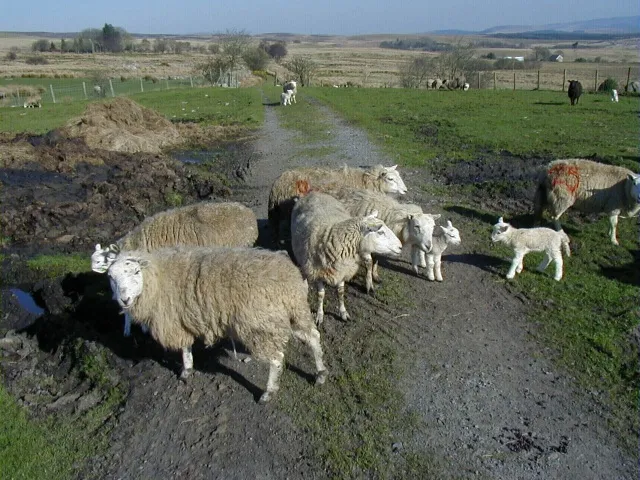
Photo: Hywel Williams, CC BY-SA 2.0, via Wikimedia Commons
When Brexit campaigners spoke of liberating British farmers from Brussels bureaucracy, many in rural England, Wales, and Scotland dared to believe them. The promise was compelling — a sovereign agricultural policy, tailored to British conditions, rewarding British producers rather than funnelling money through the administrative machinery of the Common Agricultural Policy. Years on, the reality is starker: a subsidy transition that has accelerated farm bankruptcies, rewarded scale over stewardship, and quietly dismantled the social fabric of communities that have worked the land for generations.
From Direct Payments to Environmental Land Management
The centrepiece of post-Brexit agricultural reform in England is the shift from the EU's Basic Payment Scheme — which distributed subsidies largely according to land area — to the Environmental Land Management scheme, or ELMS. In principle, the ambition is laudable. Rather than paying landowners simply for owning land, the new framework seeks to reward farmers for delivering public goods: improved biodiversity, cleaner waterways, carbon sequestration, and enhanced access to the countryside.
In practice, the transition has proved deeply disruptive. The Basic Payment Scheme, for all its imperfections, provided predictable income that underpinned the financial viability of thousands of smaller holdings. Its phased withdrawal, which began in 2021 and is scheduled to complete by 2027, has removed a financial floor without yet constructing a reliable replacement. Many farmers have found the application processes for ELMS complex, the payment rates uncertain, and the bureaucratic demands considerable — precisely the kind of regulatory friction that Brexit was supposed to eliminate.
The National Farmers' Union has warned repeatedly that the pace of transition risks pushing viable farms into insolvency. Farm business surveys conducted since 2021 show declining profitability across multiple sectors, with arable and upland livestock farms among the most severely affected. Insolvency practitioners have reported a measurable uptick in agricultural cases, though the full scale of distress is frequently obscured by farmers' reluctance to acknowledge financial difficulty until it becomes unavoidable.
Consolidation and the Disappearing Small Farm
The structural consequence of this pressure is consolidation. When smaller operators cannot sustain themselves, their land does not disappear — it is absorbed. Larger agribusinesses and institutional investors, including pension funds and asset management firms, have demonstrated a pronounced appetite for agricultural land, drawn by its inflation-hedging qualities and its potential value under emerging carbon and biodiversity credit markets.
This dynamic was already visible before Brexit, but the removal of area-based subsidy payments has accelerated it considerably. A family farm of two hundred acres, which might once have sustained a modest but viable livelihood with subsidy support, now faces a more precarious calculation. Without guaranteed income, the arithmetic of borrowing, input costs, and market volatility becomes unforgiving. The rational response, for many, has been to sell.
The consequences extend well beyond individual farm gates. Rural communities in England's uplands, in mid-Wales, and across large parts of Scotland are experiencing a hollowing-out that mirrors, in its own particular way, the deindustrialisation that reshaped northern towns in the 1980s. Village schools lose pupils. Agricultural merchants and rural suppliers contract their operations. The social institutions that depended on a critical mass of working farming families — agricultural shows, Young Farmers clubs, the informal networks of mutual aid that characterise rural life — quietly diminish.
The Trade Dimension
Agricultural trade policy has compounded the domestic subsidy problem. Post-Brexit trade agreements, notably those struck with Australia and New Zealand, have opened British markets to competitive imports produced under regulatory frameworks that differ markedly from domestic standards. British farmers are required to meet specific welfare, environmental, and food safety requirements that carry real costs. When cheaper imports produced to lower standards enter the market, the competitive disadvantage is tangible.
Government assurances that import quotas would protect sensitive sectors have offered limited comfort to livestock producers in particular. Welsh lamb farmers, already navigating the complexities of trading with a European market that was once their primary customer, now face the additional pressure of antipodean competition in the domestic market. The irony that Brexit was partly sold as a means of protecting British standards has not been lost on those who find their livelihoods undercut by the very trade liberalisation it enabled.
The Devolved Dimension
It is worth noting that agricultural policy is a devolved matter, and the picture varies across the four nations. Scotland and Wales have pursued their own post-Brexit frameworks, each attempting to balance support for farm incomes with environmental objectives. Neither, however, has been immune to the broader pressures of input cost inflation, labour shortages following the end of free movement, and market disruption.
The loss of seasonal agricultural workers from the EU has been particularly acute. The Seasonal Worker visa scheme introduced to fill the gap has been welcomed as a partial solution, but it has not fully compensated for the depth and flexibility of the pre-Brexit labour pool. Fruit and vegetable growers in Kent, Herefordshire, and the Vale of Evesham have reported ongoing difficulties in securing sufficient harvest labour, contributing to crop losses and, in some cases, decisions to reduce planted acreage.
A Reckoning Deferred
The government's position remains that the transition to ELMS represents a long-term investment in a more sustainable and productive agricultural sector. Officials point to the higher-tier agreements available under the scheme, which can provide substantial payments to farms that commit to significant environmental improvements. There is genuine merit in the underlying philosophy — the old subsidy model was neither efficient nor particularly effective at delivering environmental outcomes.
But philosophy offers little comfort to a hill farmer in Cumbria watching their payment statement shrink year on year while navigating an application process designed, it often seems, for those with professional support rather than those who spend their days outdoors in all weathers. The gap between the policy's ambition and its operational reality remains wide, and the costs of that gap are being borne disproportionately by those with the fewest resources to absorb them.
Britain's agricultural future may yet be reshaped into something more environmentally coherent and economically resilient. But the path to that future is strewn with the wreckage of farms that could not survive the crossing. For rural Britain, the promised golden age has, thus far, looked considerably more like a long and difficult winter.